


Executive Summary: The Paradigm Shift in Calibration
For decades, the “rolling road” or chassis dynamometer (roller dyno) was the undisputed king of the performance industry. It was the standard yardstick by which all horsepower was measured. However, as the automotive aftermarket has evolved, so too has the physics of the vehicles we tune. We are no longer dealing with simple carbureted V8s making 300 horsepower. We are dealing with complex, forced-induction street cars pushing 600HP, 800HP, and even 1000HP through street-legal tires.
As these horsepower levels have skyrocketed, the physical limitations of roller dynos have become dangerous liabilities. The friction-based model simply cannot cope with modern torque outputs.
At MotorCorp Solutions, we made a strategic decision to transition to the Mainline ProHub 2000. We did not do this because it is easier—in fact, it requires more labor to set up. We did it for one specific reason: Data Integrity. * Roller Dynos rely on the coefficient of friction between rubber and steel. They are subject to tire slip, strap stretching, varying tire pressures, and dangerous instability at high wheel speeds.
- Hub Dynos rely on a direct mechanical coupling. They bolt directly to the vehicle’s axle hubs, removing the wheel and tire from the equation entirely.
This article serves as the definitive, deep-dive guide to understanding why modern calibration demands hub-based technology, and why the “roller” is becoming a relic of the past.
Introduction: The Evolution of Automotive Calibration
The Shift from “Power Runs” to “Precision Engineering”
In the early 2000s, “Dyno Tuning” was often viewed by the public as a vanity exercise. It was a way to print a glossy piece of paper saying a car made 300kW to show off at a car meet. The “Power Run”—a simple, wide-open throttle ramp from 2,000 RPM to Redline—was the standard, and often the only, measure of success. If the number was big, the job was done.
Today, that mindset is obsolete. Tuning is no longer about generating a peak number; it is about Calibration. Modern Engine Control Units (ECUs) like the Haltech Nexus, MoTeC M1, and Emtron series are not just fuel computers; they are supercomputers managing the entire vehicle ecosystem. They execute millions of calculations per second to manage:
- Drive-by-wire throttle arbitration.
- Variable Valve Timing (VVT) and Cam Phasing.
- Multi-stage traction control strategies.
- Flex-fuel content analysis and interpolation.
Tuning these complex systems requires more than a 10-second power run. It requires holding the engine at specific load points (e.g., 3500 RPM at 40% throttle) for extended periods to map volumetric efficiency perfectly. The “Power Run” is dead. Precision Steady-State Calibration is the new standard, and only one type of dyno can perform this flawlessly.
Why 1000HP Street Cars Broke the Roller Model
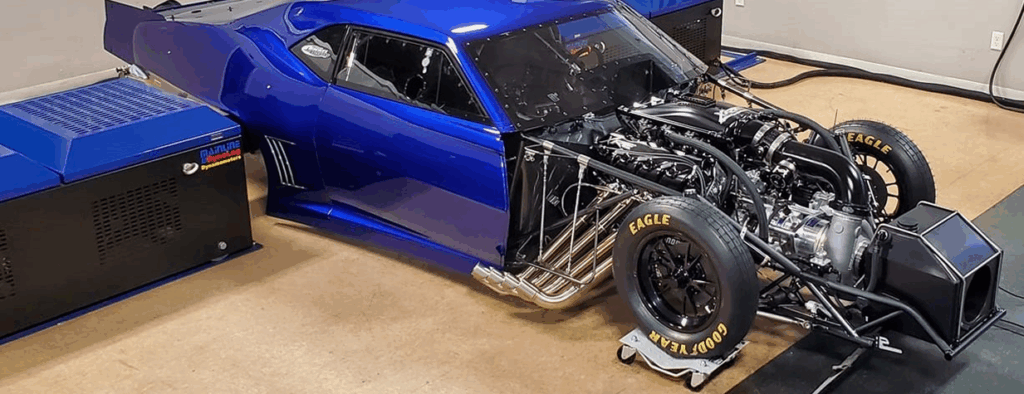
The automotive landscape has changed dramatically. A decade ago, a 1000HP vehicle was a dedicated drag car with a parachute and massive slick tires. It was never seen on the street. Today, thanks to advancements in turbocharging and E85 fuel, we routinely see Nissan R35 GTRs, Audi RS3s, and Turbo LS Commodores making 1000HP+ while retaining full street legality and street tires.
This presents a physics problem. When you attempt to transfer 1000HP through a standard rubber street tire onto a smooth steel roller, the laws of physics intervene. The friction coefficient of street rubber is simply not high enough to support that level of tractive effort without slipping.
To combat this slip on a roller dyno, operators are forced to strap the car down tighter and tighter. This creates a new set of problems: it distorts the tire carcass, creates immense heat, and generates false load readings. The roller model simply cannot keep up with the torque output of modern modified engines.
The Mechanics of Measurement
To understand the superiority of the Hub Dyno, we must first deeply understand the fundamental mechanics of how torque is measured in a workshop environment.
How Roller Dynos Work: Friction, Straps, and Inertia
A roller dyno (Chassis Dynamometer) functions essentially like a giant treadmill for a car. The vehicle is driven onto heavy steel drums, and the wheels spin the drums.
- Friction Dependent: The entire system relies on the friction patch between the tire and the roller. If that friction is broken (traction loss), measurement is impossible. This is the weak link. The tire is the “middleman,” and it is a terrible middleman because it changes properties based on heat and pressure.
- Inertia Based: Many older roller dynos are “Inertia Dynos.” They calculate horsepower based on Newton’s Second Law ($F=ma$). They measure how fast the car can accelerate the known mass of the heavy steel roller. The problem is, this method does not account for air resistance or rolling resistance accurately.
- The Flaw: There are two distinct points of energy transfer loss in this system:
- Loss A: The Engine to the Transmission/Drivetrain (Mechanical Loss).
- Loss B: The Tire to the Roller (Parasitic Loss). Loss B is the “Variable of Chaos.” It changes depending on how tight the straps are, how hot the tire is, and even the humidity in the room.
How Hub Dynos Work: Direct Axle Coupling
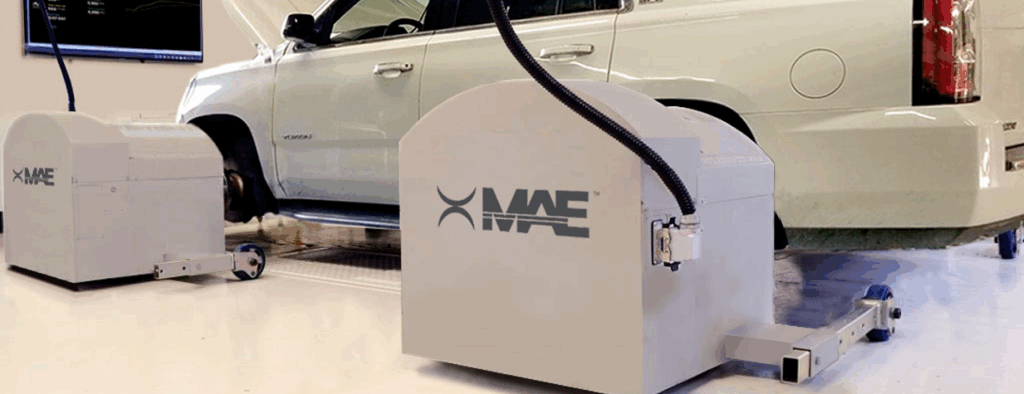
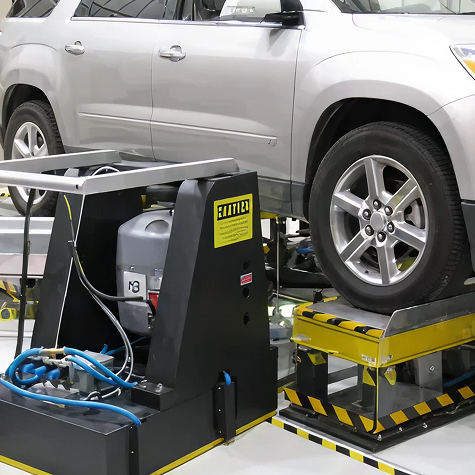
A Hub Dyno, specifically the Mainline ProHub 2000 utilized at MotorCorp, fundamentally changes the connection interface. It removes the wheel and tire assembly entirely from the equation.
- Direct Connection: We remove the customer’s wheels and bolt huge, precision-machined steel adapters directly to the vehicle’s wheel studs.
- Hydraulic/Electric Absorption: These adapters connect directly to a Power Absorption Unit (PAU)—a heavy-duty hydraulic or eddy-current retarder housed in a pod.
- The Result: There is a solid, continuous mechanical link between the engine’s crankshaft, through the transmission, into the axle, and directly into the measurement device. There is zero opportunity for slip. The energy has nowhere to go but into the load cell to be measured.
The Mainline ProHub 2000: Technical Overview
The ProHub 2000 is not just a passive measuring tool; it is an active diagnostic instrument.
- Capacity: It is rated for 3000HP+ of continuous absorption. It can handle torque figures that would snap a roller dyno shaft.
- Reaction Speed: The control system operates in real-time. It can adjust the load on the engine in milliseconds. This allows us to simulate road conditions (like towing a caravan uphill) or hold the RPM steady within a single revolution accuracy.
- Sensitivity: It is capable of detecting a 0.5HP change caused by a single degree of ignition timing adjustment or a change in oil viscosity. This level of resolution is impossible on rollers due to the “noise” created by the tires.
The Physics of Inaccuracy: The “Tire Variable”
The single biggest argument against roller dynos—and the reason high-end motorsport has abandoned them—is the tire. Rubber is not a solid; it is a viscoelastic material. It behaves partly like a fluid and partly like a solid. It stretches, compresses, heats up, and deforms under load. Introducing a variable material into a precision measurement workflow ensures inaccurate data.
Understanding Tire Slip Ratio (It’s Never 0%)
On a roller dyno, Micro-Slip is always present. Even when a car doesn’t sound like it’s spinning its tires, it is. The tire has to deform to grip the roller, and in doing so, the tread surface moves slightly slower than the wheel rim.
The Statistic: Even on low-power cars (200HP), tire slip on rollers accounts for a 1% to 3% loss in data accuracy.
The High-HP Reality: On cars exceeding 600HP, or cars with high torque (like Turbo Diesels), slip can easily exceed 10%.
Why this matters: If the dyno reads 600HP, the engine might actually be producing 660HP, but 60HP is being lost to tire slip. This confuses the ECU. Modern ECUs compare wheel speed to engine RPM. If they detect the wheels spinning faster than they should, they may trigger traction control cuts, closing the throttle and ruining the tune. Worse, an inexperienced tuner might add more boost to “chase the number,” pushing the engine into unsafe territory because they think it’s underperforming.
The Impact of Tire Pressure and Temperature
Consider this common scenario on a Roller Dyno:
- Run 1 (Cold Tires): The car drives in. The tires are at 32psi and the rubber is stiff (cold). The grip on the roller is moderate. The Dyno reads 400HP.
- Run 5 (Hot Tires): After four hard pulls, the friction has generated immense heat. The air inside the tire expands (Ideal Gas Law), raising pressure to 40psi. The rubber compound softens significantly. The contact patch changes shape. Grip actually decreases because the tire is greasy. The Dyno reads 385HP.
The tuner looks at the screen and asks: “Did we lose power? Is the intercooler heat soaked? Is the engine knocking?” In reality, the engine is performing perfectly. The tire has changed properties. The data is corrupted by the measurement method. On a Hub Dyno, Run 1 and Run 50 are mathematically identical because steel hub adapters do not change their physical properties with temperature.
“Tire Haze”: How Rubber Deformation Corrupts Data
At high wheel speeds (200km/h+), tires on rollers experience a phenomenon called “standing waves.” The sidewall creates a ripple effect because it cannot recover its shape fast enough before hitting the roller again.
This deformation generates immense internal heat. In extreme cases, you can see “Tire Haze” – a light smoke rising from the tires. This is not just rubber burning; it is the rubber compound literally vaporizing due to internal friction and hysteresis. From a physics standpoint, this is Energy Conversion. The horsepower your engine produced is not being measured by the dyno; it is being converted into heat and smoke. This results in a lower, inaccurate power reading.
Why “Wheel Horsepower” Fluctuates with Strap Tension
To stop a car from slipping on rollers, the operator’s only option is to ratchet the tie-down straps tighter. This pulls the car down, crushing the tire into the roller.
- Loose Straps: The tire slips -> Low Power Reading.
- Tight Straps: The tire is deformed and crushed -> High Rolling Resistance -> Low Power Reading.
- The Sweet Spot: It is a complete guess.
Depending on how hard the operator cranks the ratchet strap, power readings can fluctuate by 15-30HP. If you tune the car, take it off the dyno for lunch, and strap it back down later, you will likely get a different reading because the strap tension is not identical. A Hub Dyno has no straps. It uses gravity and solid bolts. The reading is absolute and repeatable, year after year.
Safety Protocols: Elimination of Kinetic Energy
At MotorCorp, we value our technicians and your vehicle above all else. The safety differences between the two systems are stark and cannot be overstated.
The “Strap Fear”: Risks of Vehicles Jumping Rollers
If you search “Dyno Fails” on YouTube, you will see thousands of videos of cars snapping straps and launching off rollers.
- The Physics: A vehicle on a roller dyno is a stored energy device. The engine is trying to push the car forward at 200km/h. The only thing preventing the car from launching through the workshop wall is a $50 nylon strap.
- The Consequence: Straps degrade over time. If a strap fails while a car is doing 250km/h, the vehicle creates a projectile path. It can veer sideways, jump the rollers, and crash into walls, equipment, or people.
Tire Delamination at 300km/h
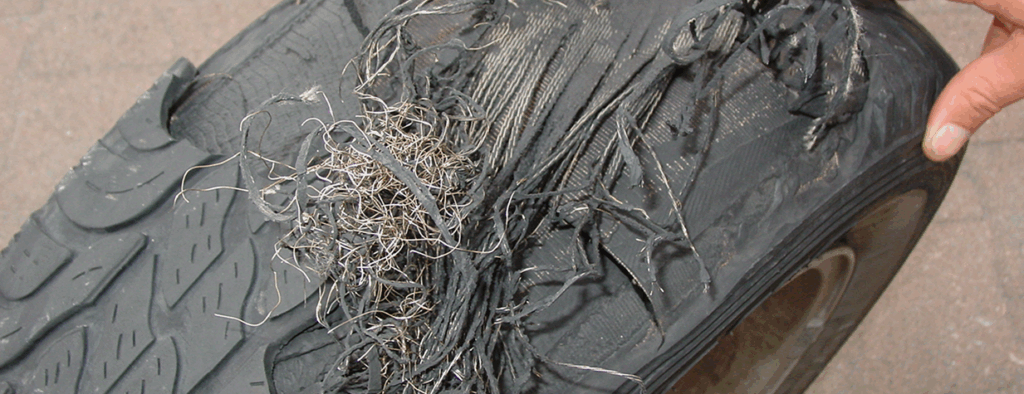
We often tune GTRs, Lamborghinis, and Supercars capable of wheel speeds in excess of 300km/h. Standard road tires are not designed to run against a steel roller at these speeds. The roller creates a localized heat spike in the center of the tread.
This heat can cause the tread to delaminate (separate from the carcass). A tire exploding at 300km/h is like a bomb going off in the wheel well. It destroys the rear quarter panel, rips out suspension lines, destroys the exhaust, and sends rubber shrapnel flying through the workshop.
Zero Inertia: Why Hub Dynos are Safer
On a Mainline ProHub, the vehicle is statistically stationary.
- If a failure occurs (e.g., an axle breaks), the engine simply revs up against the limiter.
- The car cannot “drive off” the dyno because it has no wheels. It is sitting on solid steel stands.
- The kinetic energy is contained within the hydraulic fluid inside the pods, not in the spinning mass of a wheel and tire.
- Bystanders are safe. The vehicle is secure.
Tuning Precision and Repeatability
This is where the rubber meets the road (or rather, where the hub meets the axle). The Hub Dyno allows for tuning strategies that are impossible on rollers.
Steady State Control: Holding RPM Within 1 Revolution
To tune the “Cruise” area of a map (where you spend 99% of your driving time), we need to hold the engine at exactly, say, 2500 RPM while varying the load (simulating going up a steep hill vs. driving on flat ground).
- Roller Dyno: As we increase the load to simulate a hill, the tire begins to slip on the roller. The RPM fluctuates up and down. The tuner struggles to keep the cursor in the correct “cell” on the laptop. The data is messy.
- ProHub 2000: We can program the dyno to lock the RPM at 2500. We can then floor the throttle 100%, and the dyno will apply massive hydraulic resistance to keep the engine at exactly 2500 RPM. It will not budge. This allows us to perfectly dial in ignition timing, fuel trim, and variable cam angles for maximum fuel economy and throttle response.
Eliminating Drivetrain Shock Causing False Knock
Modern engines use Knock Sensors. These are essentially microphones screwed into the engine block that listen for the specific frequency of detonation (engine pinging). On a roller dyno, the sound of the tire “squealing” on the roller, or the vibration of the suspension straining against the straps, creates “mechanical noise.”
- The Consequence: The ECU hears this noise and thinks the engine is knocking. It pulls ignition timing to save the engine, drastically reducing power. The tuner spends hours trying to “fix” a knock problem that doesn’t exist.
- The Hub Solution: By removing the tire and wheel, we remove the source of the vibration. The powertrain runs smooth as silk. The Knock Sensor hears only the engine combustion events. This allows us to tune closer to the limit safely, extracting more power without false alarms.
Why Hub Dynos read “Axle HP” (and why it’s more accurate)
You may hear people say, “Hub Dynos read high.” This is a misunderstanding. A Roller Dyno measures Wheel Horsepower (WHP), which includes the loss of energy used to spin the heavy tire and overcome friction. A Hub Dyno measures Axle Horsepower, which is the power delivered to the hubs.
The Hub Dyno reading is higher because it is not losing energy to tire friction. It is a more accurate representation of what the engine is actually delivering to the drivetrain. Why would you want to measure your engine’s performance based on how good your tires are? You want to measure the engine.
Setup and Geometry Advantages
The Problem with Camber on Roller Dynos
Modern stance cars, drift cars, or Time Attack cars often run aggressive negative camber (-3 degrees or more). This means the wheels are tilted inward. On a flat steel roller, a car with -3 degrees of camber is only touching the roller with the very inside edge of the tire.
- Contact Patch: The contact area is reduced by 60% or more.
- Traction: Traction becomes non-existent.
- The “Strap Fear”: Risks of Vehicles Jumping Rollers: The entire weight of the car is focused on a 1-inch strip of rubber. This destroys the inner sidewall of the tire almost instantly.
Mainline’s Non-Coaxial Design: Accommodating Extreme Geometry
The ProHub 2000 modules are not fixed; they articulate. They can be tilted and adjusted to match the camber angle of the vehicle. Whether you have a VIP style car with -10 degrees of camber or a solid axle drag car, the connection to the dyno is always 100% flat, secure, and perpendicular to the axle rotation. We don’t need to adjust your suspension just to get you on the dyno.
Testing Vehicles with Aggressive Ground Effects
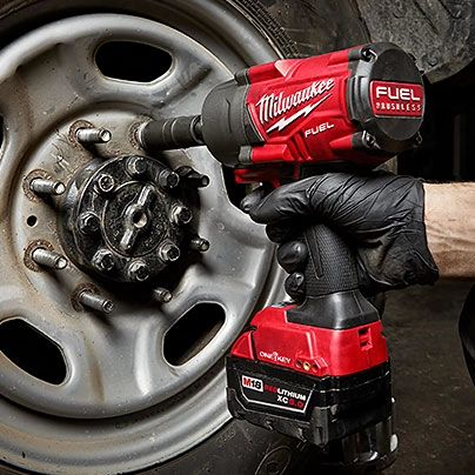
Modern Time Attack cars utilize extremely low front splitters and rear diffusers for aerodynamics. Getting these onto a traditional roller dyno ramp often requires removing bumpers, removing side skirts, or raising the vehicle’s ride height (which alters suspension geometry and alignment). Hub Dynos require zero clearance. We simply jack the car up in the parking lot, remove the wheels, and roll the dyno pods onto the hubs. We can tune the car at its actual track ride height without risking damage to expensive carbon fiber bodywork.
Economic and Efficiency Comparison
Setup Time Analysis: Jacking vs. Strapping
- The Myth: “Hub dynos take too long to set up.”
- The Reality: Properly strapping a high-horsepower car on rollers is a laborious process. It takes 15-20 minutes to find secure chassis points, route straps through suspension arms without crushing brake lines, and test strap tension.
- Hub Setup: We jack the car up. We rattle-gun the wheels off. We bolt the adapter on. Total time: 10-15 minutes. The time difference is negligible, but the difference in data quality is massive.
Saving Customer Tires (No Heat Cycling)
A comprehensive dyno session involves dozens of full-throttle runs. This generates immense heat. On a roller dyno, a single tuning session can put the equivalent of 5,000km of wear on a set of tires. If you are running soft compound semi-slicks (e.g., Yokohama A050 or Michelin Cup 2), which cost $2,000+ a set, a single dyno session on rollers can “heat cycle” the tires out, rendering them hard and useless for the track. Hub Dyno Benefit: Your expensive race tires sit safely stacked in the corner of the shop while we tune your engine. You leave with 100% fresh rubber, ready to set a PB at the track.
Case Study: 1000HP GTR on Rollers vs. Hubs
To illustrate the difference, let’s look at a real-world example from our shop.
Vehicle: Nissan R35 GTR (Built VR38DETT Engine) Goal: 1000HP at the wheels.
Scenario A: Previous Attempt on a Competitor’s Roller Dyno
- The car begins the run. As the massive turbos spool at 4,500 RPM, torque skyrockets.
- The tires immediately break traction on the steel rollers.
- The dyno graph shows a jagged “dip” in power right at peak torque.
- The operator tightens the straps down hard to stop the slip.
- The tire is now crushed. Rolling resistance increases.
- Result: The graph is inconsistent and “noisy.” The shop stops at 920HP because the tires are smoking. The tuner cannot smooth out the boost curve because the data is corrupted by slip.
Scenario B: The MotorCorp Mainline ProHub Experience
- We bolt the hydraulic modules to the axles.
- The car hits peak boost. The hydraulic retarders absorb the energy instantly.
- There is zero slip. The energy transfer is 100% efficient.
- The dyno graph is a smooth, linear curve that perfectly reflects the engine’s performance.
- Result: 1045HP. The data is validated. The tuner can clearly see a small dip in fuel pressure at 6,000 RPM (which was hidden by tire noise on the roller dyno) and corrects it, saving the engine from potential damage.
Conclusion: The MotorCorp Standard
We did not choose the Mainline ProHub 2000 because it was the cheapest option. It is significantly more expensive than a standard roller dyno. We did not choose it because it is the fastest option.
We chose it because at MotorCorp Solutions, we are engineers first.
In an era where street cars are faster than V8 Supercars, using friction-based roller technology is a compromise we are not willing to make. The Hub Dyno offers:
- Absolute Safety for your vehicle and our staff.
- Unrivaled Accuracy for your calibration data.
- Perfect Repeatability for your results, regardless of tire temp or strap tension.
When you book a session with MotorCorp, you aren’t paying for a “power run.” You are paying for the most precise, data-driven calibration available in Melbourne.
Frequently Asked Questions (Hub vs Roller)
1. Does a Hub Dyno read higher than a Roller Dyno?
Generally, yes—but it reads higher for the right reasons. A Hub Dyno eliminates “Tire Loss” (Rolling Resistance). On a roller dyno, you lose significant power just trying to turn the heavy mass of the tire and overcoming the friction of the rubber squirming on the roller. A Hub Dyno reads the true “Axle Horsepower.” It is a more accurate representation of what the engine is actually delivering to the drivetrain.
2. Is it safe for my drivetrain?
Yes. The load applied by the ProHub is linear and computer-controlled. In fact, it is safer than a roller dyno because there is no “shock loading.” On rollers, if tires grip and slip violently, it sends massive shockwaves through your CV joints and differential. The ProHub applies smooth, liquid resistance, protecting your gears.
3. Can you tune 2WD cars on the ProHub?
Yes. Our facility is equipped for high-horsepower 2WD configurations.
4. What do I need to bring for a Hub Dyno session?
The most critical item is your Lock Nut Key. We need to remove your wheels to attach the dyno pods. Please ensure your wheel nuts are accessible and not seized. Also, ensure your fuel tank is full of the specific fuel you wish to be tuned on.
5. Why do some shops still use Roller Dynos?
Cost and convenience. A roller dyno is faster for quick “power checks” on low-power cars (under 300HP) and is much cheaper to purchase. For general mechanical repairs or speedometer checks, they are fine. For High-Performance Tuning in the modern era, they are technologically obsolete.